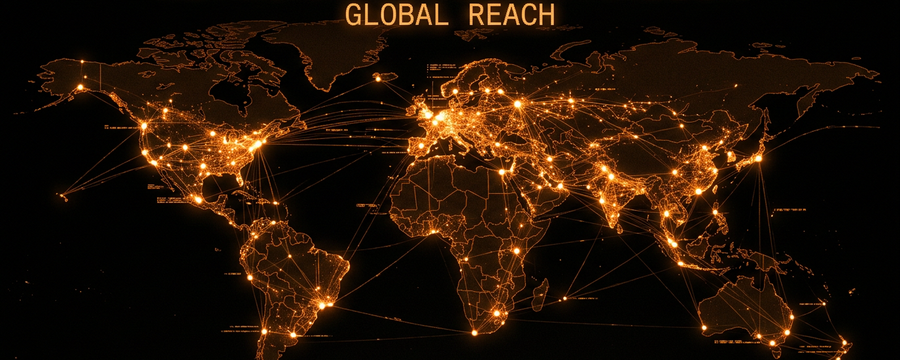
The December infrastructure expansion added additional hidden service nodes across multiple geographic jurisdictions, enhancing both resilience and global accessibility. The distributed architecture prevents any single-jurisdiction legal action or infrastructure event from taking down the entire service — a critical property for darknet market longevity.
Automatic failover mechanisms were confirmed through stress testing to activate within 30 seconds of single-node failure detection. This response time was validated across multiple failure scenarios including unexpected server shutdowns, network partition events, and simulated DDoS attack conditions targeting individual nodes.
Tor Rendezvous Point Diversity
The expansion also increased the diversity of Tor rendezvous points used by the hidden service. Tor's hidden service protocol requires meeting connecting clients at rendezvous points — temporary Tor relay nodes acting as meeting places. With multiple independent service nodes, the pool of available rendezvous points is larger, reducing the risk of rendezvous point-based traffic correlation attacks.
Security researchers noted that hidden service node diversity is an underappreciated resilience property. A market using a single server with a single onion address has a single point of failure — both for availability and for adversarial identification. Multiple independent nodes with a coordinated load balancing layer create a more robust attack surface.
// INFORMATIONAL NOTICE
Infrastructure documentation for educational purposes.