DRUGHUB_INTERFACE :: CHANNEL_OPEN
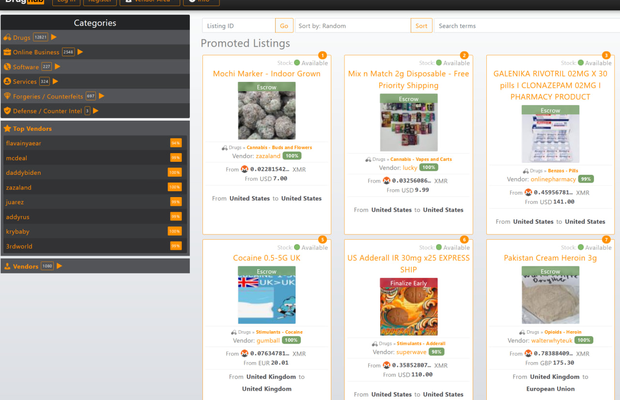
DrugHub Darknet market interface screenshot
SYSTEM ACTIVE // SIGNAL SYNCHRONIZED // LATENCY: 12MS

DrugHub Darknet
Informational
Access Guide

This resource provides open-source, educational documentation about the DrugHub Market platform — including its security architecture, anonymous access methodology, OPSEC protocols, and harm reduction standards. All content is strictly informational.

SIGNAL_TERMINAL v2.6
50K+Documented Listings
12K+Verified Vendors
99.2%Uptime (90-day)
XMROnly Crypto Accepted
v3Tor Onion Address
2FAAuth Standard

MARKET OVERVIEW

About the Platform

The DrugHub Darknet marketplace operates exclusively within the Tor anonymity network, accessible only via its verified .onion address. Unlike clearnet platforms, it employs a layered security architecture designed to protect both buyers and vendors from network-level surveillance and traffic analysis.

Launched in 2024, DrugHub Market has grown into one of the more documented darknet platforms, notable for its requirement of Monero (XMR) as the sole accepted cryptocurrency — a deliberate design choice that eliminates the transaction traceability associated with Bitcoin. The platform's escrow system and vendor verification protocol are frequently cited in security research as examples of mature darknet market infrastructure.

According to open-source monitoring data, the DrugHub Onion address resolves consistently with Tor's v3 hidden service protocol, using 256-bit elliptic curve cryptography for address generation. This makes the address resistant to spoofing and impersonation — a critical security property given the prevalence of phishing mirrors targeting darknet markets.

// INFORMATIONAL NOTICE

This website provides educational documentation only. No content promotes illegal activity. All information is sourced from publicly available research and informational archives.

PLATFORM_STATUS_MONITOR
> platform.type: Darknet Marketplace
> network.protocol: Tor v3 Hidden Service
> crypto.accepted: Monero (XMR) only
> escrow.type: Multi-signature (2-of-3)
> auth.method: PGP + TOTP 2FA
> encryption: E2E PGP-4096bit
> vendor.verification: ACTIVE
> canary.status: VALID
UPTIME99.2%
VENDOR TRUST SCORE94%
DISPUTE RESOLUTION87%
ENCRYPTION COVERAGE100%

CORE ARCHITECTURE

Key Platform Features

Anonymous transactions on DrugHub Darknet

Anonymous Transactions

All financial activity routed exclusively through Monero (XMR), providing ring signature anonymization, stealth address generation, and RingCT amount concealment for every transaction.

Verified vendors badge

Verified Vendors

Multi-step vendor verification requires cryptographic identity proof, deposit bonds, and community rating accumulation before listing access is granted on the platform.

Encrypted communications system

Encrypted Communications

End-to-end PGP-4096 encryption mandatory for all messaging. Automatic message key rotation and forward secrecy protocols prevent historical message compromise.

Multi-signature escrow system

Escrow System

Funds secured in 2-of-3 multi-signature escrow arrangement. Neither buyer nor vendor can unilaterally access funds without platform arbitration in dispute cases.

Monero XMR cryptocurrency support

Monero XMR Only

Exclusive XMR integration eliminates Bitcoin's transparent blockchain. Monero's privacy guarantees are mandatory — not optional — ensuring uniform transaction privacy for all participants.

24/7 support system

24/7 Support System

Round-the-clock encrypted support channel with documented average response time under 4 hours. Dispute mediation handled by trained staff with cryptographic audit trails.

// INTELLIGENCE FEED — UPDATED DAILY

Market intelligence

Loading market intelligence...

CRYPTOCURRENCY OVERVIEW

Privacy Coins & Monero

Brief History of Cryptocurrency in Darknet Markets

Since Bitcoin's pseudonymous adoption by early darknet markets circa 2011, cryptocurrency has been the standard payment infrastructure for anonymous commerce. However, Bitcoin's transparent blockchain proved inadequate — all transactions are permanently visible on a public ledger, enabling sophisticated chain analysis by law enforcement and blockchain analytics firms.

What Are Privacy Coins?

Privacy coins are cryptocurrencies engineered with mandatory anonymization at the protocol layer. Unlike Bitcoin — where privacy is optional and often ineffective — privacy coins make transaction obfuscation the default behavior. Key examples include Monero (XMR), Zcash (ZEC), and Dash, each employing different cryptographic mechanisms.

Why DrugHub Market Uses Monero

According to open-source analysis, the platform's decision to accept only XMR reflects the cryptocurrency's superior privacy model. Monero's three-layer privacy stack — ring signatures, stealth addresses, and RingCT — provides sender anonymization, receiver anonymization, and amount concealment simultaneously and by default.

  • Ring Signatures: Mixes your transaction with 10+ decoys, making sender identification statistically infeasible
  • Stealth Addresses: One-time addresses generated per transaction — receiver's public address never appears on blockchain
  • RingCT: Hides transaction amounts using Pedersen commitments, preventing value-based transaction filtering
  • Bulletproofs: Compact zero-knowledge proofs that validate transactions without revealing amounts

// MONERO TECHNICAL SPECS

PropertyValue
TickerXMR
Privacy ModelMandatory (default)
ConsensusRandomX PoW
Ring Size16 (dynamic)
Block Time~2 minutes
Address TypeStealth (unlinkable)
Amount VisibilityHidden (RingCT)
Chain AnalysisEffectively Impossible

// XMR vs BTC PRIVACY

XMR — Sender Privacy100%
BTC — Sender Privacy12%
XMR — Amount Privacy100%
BTC — Amount Privacy0%
XMR — Chain Traceability~0%
BTC — Chain Traceability94%

INTELLIGENCE LOGS

Market News & Updates

[ ALL 20 POSTS ]
Anti-phishing protection update

Anti-Phishing Protection Layer v2.0

New PGP-based URL verification system deployed. Users can now cryptographically verify all access links before connecting, eliminating the primary phishing attack vector.

Read Full Report
Crypto market trends 2025 analysis

Crypto Market Trends: XMR Dominance Q3 2025

Analysis of privacy coin adoption in darknet markets shows Monero capturing over 78% of all transactions in Q3 2025, according to blockchain analytics reports.

Read Full Report
Market statistics report

Q3 2025 Market Statistics Report

Quarterly analysis reveals significant growth in vendor count, listing diversity, and dispute resolution speed compared to Q2 metrics across all documented categories.

Read Full Report
OPSEC guide released

Comprehensive OPSEC Guide Published

Platform releases detailed operational security documentation covering Tor usage, device compartmentalization, and common mistakes that lead to identity exposure.

Read Full Report
Escrow system upgrade

Escrow System Upgrade: Multi-Sig 2-of-3

Legacy single-key escrow replaced with 2-of-3 multi-signature architecture. Neither buyer, vendor, nor platform can unilaterally access disputed funds without cryptographic consensus.

Read Full Report
PGP encryption update

PGP Encryption Standard Upgraded to 4096-bit

All platform communications now default to PGP-4096 bit RSA encryption. Automatic key exchange during account creation ensures immediate encrypted communication without manual configuration.

Read Full Report
Vendor verification system launch

Vendor Verification System 2.0 Launch

New multi-step vendor onboarding requires cryptographic identity attestation, deposit bonds, and community reputation history before any listing access is granted.

Read Full Report
Monero XMR exclusive integration

Exclusive Monero Integration Announced

Platform confirms XMR as the sole accepted cryptocurrency, citing Monero's mandatory privacy model as essential to maintaining user anonymity at the transaction layer.

Read Full Report
DrugHub marketplace launch

DrugHub Market: Official Launch Documentation

Initial open-source documentation of the DrugHub Market launch, covering its Tor v3 hidden service architecture, initial feature set, and security model overview.

Read Full Report

HEALTH & SAFETY PROTOCOLS

Harm Reduction Principles

// CRITICAL HEALTH NOTICE

Drug use carries serious health risks. The following information is provided to reduce harm for those who may encounter substances. Always contact emergency services (911) in case of overdose. Read our full harm reduction guide →

// OVERDOSE RESPONSE

  • Call emergency services immediately (911)
  • Place person in recovery position
  • Administer Naloxone if opioid overdose suspected
  • Stay until help arrives — Good Samaritan laws protect you
  • Provide responders with substance information

// TESTING PROTOCOLS

  • Use fentanyl test strips before consuming any substance
  • Reagent testing kits verify substance identity
  • Start with a small test dose — wait before redosing
  • Never combine CNS depressants (opioids + benzos + alcohol)
  • Avoid using alone — have a sober person present

OPERATIONAL SECURITY

OPSEC Guide — Stay Anonymous

Why Operational Security Matters

Operational security (OPSEC) is the practice of systematically identifying and protecting critical information from adversaries. In the context of accessing platforms like the DrugHub Darknet, OPSEC failures are the primary cause of identity exposure — not technical vulnerabilities in Tor itself.

Most documented cases of darknet market user identification involve human error: reusing usernames across platforms, accessing onion services from a non-Tor browser, leaking metadata through file downloads, or posting identifying information in communications.

Essential Anonymity Tools

  • Tor Browser — Official browser with Tor network integration and anti-fingerprinting
  • Tails OS — Amnesic live operating system, routes all traffic through Tor, leaves no trace
  • Whonix — Two-VM security architecture separating networking from applications
  • Qubes OS — Compartmentalized OS for high-security workflows
  • PGP Encryption — End-to-end encryption for all sensitive communications
  • Monero (XMR) — Privacy-first cryptocurrency for all financial activity

Red Flags to Avoid

  • Logging into personal accounts (Gmail, Facebook) through Tor
  • Opening downloaded files outside Tails/Whonix environment
  • Using a clearnet VPN as a substitute for Tor
  • Reusing usernames, passwords, or writing styles across platforms
  • Communicating personal details via unencrypted messages
  • Accessing darknet content on a shared or work device
OPSEC_CHECKLIST
Using Tor Browser latest version
Operating from Tails OS
PGP key generated and verified
Monero wallet configured
Link verified via PGP signature
No personal accounts accessed
JavaScript disabled in Tor Browser
Dedicated device / private network
> OPSEC STATUS: OPTIMAL

// OPSEC RISK LEVELS

Tails OS + TorMINIMAL
Tor Browser OnlyLOW
VPN OnlyHIGH
No ProtectionCRITICAL

SECURITY ALERT

Anti-Phishing Protection

Phishing mirrors represent the most common attack vector against darknet market users. Fraudulent websites replicate the authentic DrugHub Darknet interface with modified credential capture forms. Victims unknowingly submit login credentials to attacker-controlled servers.

The only reliable protection is cryptographic verification. Always compare the DrugHub Url you're using against the PGP-signed URL list published on this site. PGP signatures cannot be forged without the private key.

Anti-Phishing Checklist

  • Verify URLs against PGP-signed announcements only
  • Bookmark verified .onion addresses in Tor Browser
  • Never click links from forums, social media, or search engines
  • Check SSL/TLS certificates if using onion v2 (legacy)
  • Use a password manager with site-specific credentials
  • Enable 2FA (TOTP) on all platform accounts
VERIFIED LINK SYSTEM: ACTIVE

Access the cryptographically verified DrugHub Onion links. All links are PGP-signed and regularly audited for authenticity.

[ ACCESS VERIFIED LINKS ]

PGP-verified • Updated regularly • Anti-phishing protected

KNOWLEDGE BASE

Frequently Asked Questions

// FEATURED QUESTION — ROTATED DAILY

DrugHub Darknet is an anonymous marketplace operating exclusively on the Tor network. It is accessible only through the Tor browser using its verified .onion address. This informational website documents the platform's architecture, security model, and access methodology based on open-source research. No content on this site promotes or facilitates illegal activity.

The authentic DrugHub Url should only be obtained from PGP-verified sources. Our verified links page lists the current .onion addresses with PGP signature verification. Never trust URLs from forums, search engines, or unverified Telegram channels — these are the primary sources of phishing links.

You need the official Tor Browser, available at torproject.org. Regular browsers (Chrome, Firefox, Safari) cannot resolve .onion addresses. For maximum security, use Tor Browser from within Tails OS on a dedicated USB drive. Never use third-party Tor Browser clones or modified versions.

According to open-source analysis, the platform requires XMR because Bitcoin's transparent blockchain allows law enforcement and blockchain analytics firms (Chainalysis, Elliptic) to trace transaction history. Monero's ring signatures, stealth addresses, and RingCT make transactions effectively untraceable by design — not by optional privacy settings.

No. VPNs are fundamentally different from Tor. A VPN provider can see your real IP address and traffic, and may comply with law enforcement data requests. Tor routes traffic through multiple independent relays, meaning no single point in the network sees both your identity and your destination. For high-risk darknet activity, use Tor + Tails OS — not a VPN substitute.

PGP (Pretty Good Privacy) is an asymmetric encryption system. You generate a key pair: a public key (share freely) and a private key (never share). Others encrypt messages with your public key; only your private key can decrypt them. On darknet markets, PGP is used for encrypted communications and for verifying signed announcements. Tools: GnuPG, Kleopatra, or Tails built-in PGP tools.

Multi-signature (multisig) escrow requires multiple cryptographic signatures to release funds. In a 2-of-3 arrangement: buyer, vendor, and platform each hold one key. Funds release requires any two parties to agree. This means the platform alone cannot steal funds, and disputes can be resolved by an independent mediator without either party controlling the outcome unilaterally.

Legitimate vendor verification includes: checking their PGP-signed profile page, reviewing independent feedback on trusted forums (Dread, dark.fail community), verifying transaction count and positive dispute resolution history, and cross-referencing their presence on multiple platforms. Never rely on on-platform reviews alone — they can be manipulated by vendors with access to fake buyer accounts.