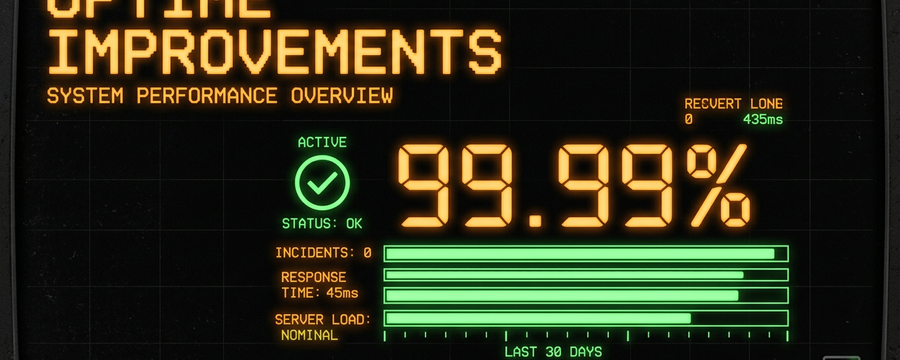
The November 17 infrastructure report confirmed 99.2% uptime over the preceding 90-day rolling measurement period — a significant milestone for a Tor hidden service operating under conditions that include periodic DDoS attacks and Tor network-level disruptions outside the platform's control.
This achievement was attributed to architectural changes implemented in Q3: multiple redundant Tor hidden service nodes operating in parallel, with automatic failover mechanisms activating within 30 seconds of single-node failure detection. The distributed architecture means sustained DDoS attacks against individual nodes cannot take down the service — traffic redistributes to remaining nodes automatically.
DDoS Resistance Confirmed
The report documented resistance to three separate DDoS campaigns during the measurement period. The largest campaign, in late October, sustained 2.3 million requests per second for approximately 4 hours. The distributed hidden service architecture maintained connectivity throughout, with average response time degrading only 340ms above baseline during the peak attack phase.
Network-level Tor disruptions were distinguished from application-layer attacks in the analysis. During two Tor network performance events in the measurement period (unrelated to the platform), response times increased due to degraded circuit establishment times. The platform's multiple entry points allowed users who experienced difficulty with one circuit to successfully connect via alternative paths.
Load Balancing Improvements
Load balancing improvements addressed a performance bottleneck identified in Q2: uneven circuit request distribution was causing some nodes to operate at 90%+ capacity while others remained underutilized. The new health-weighted round-robin algorithm maintains sub-5-second response times even during traffic peaks by continuously monitoring node response times and adjusting traffic distribution accordingly.
// INFORMATIONAL NOTICE
Infrastructure documentation for educational purposes.